
What do we do about this????
Without knocking on doors or sending money

In the last year, how many times have you gotten this frantic call or text from someone who still watches the news?
“What do we do about this???”
Here are 5 answers that aren’t canvassing, phonebanking or writing a check.
Relational organizing
A.k.a. talk to your friends and neighbors. An app compares your contacts to a pre-loaded data set, like the voter file. You contact the people who match. Ask your favorite candidate or organization which app they use. Most campaigns and organizations will even draft a sample message to get you started. Send texts, emails or phone calls.
Boom! You’re a relational organizer. 🫳🏻🎤
Get educated; educate others.
The only thing MAGA hates more than an anti-racist is an anti-racist community. So join one. There are online workshops that will help you unlearn white supremacy culture. The best ones will include interactive segments and/or breakouts so you can start building relationships. Bonus points for workshops that draw intersecting lines between racism, homophobia, transphobia, misogyny, etc.
Protect your neighbors from ICE.
Many communities have organized rapid response teams to patrol Home Depot parking lots, corners where day-laborers gather and other sites that draw lots of immigrants. Volunteers watch for ICE and warn whoever is in the area in real time. If ICE captures anyone, volunteers record the kidnapping and ask the person for their information to track them in the system and notify family members. I found my local org by googling “immigration rapid response.”
Practical support for abortion care patients
Many organizations depend on volunteers to provide transportation, after-care kits, hotline answers to patients and more. Search for “abortion funds;” even if the funds you find don’t have a volunteer program directly, I bet they know who needs your help. (Note: be prepared for a thorough screening and training process. Anti-abortion zealots are notorious for trying to infiltrate.)
Social Funding
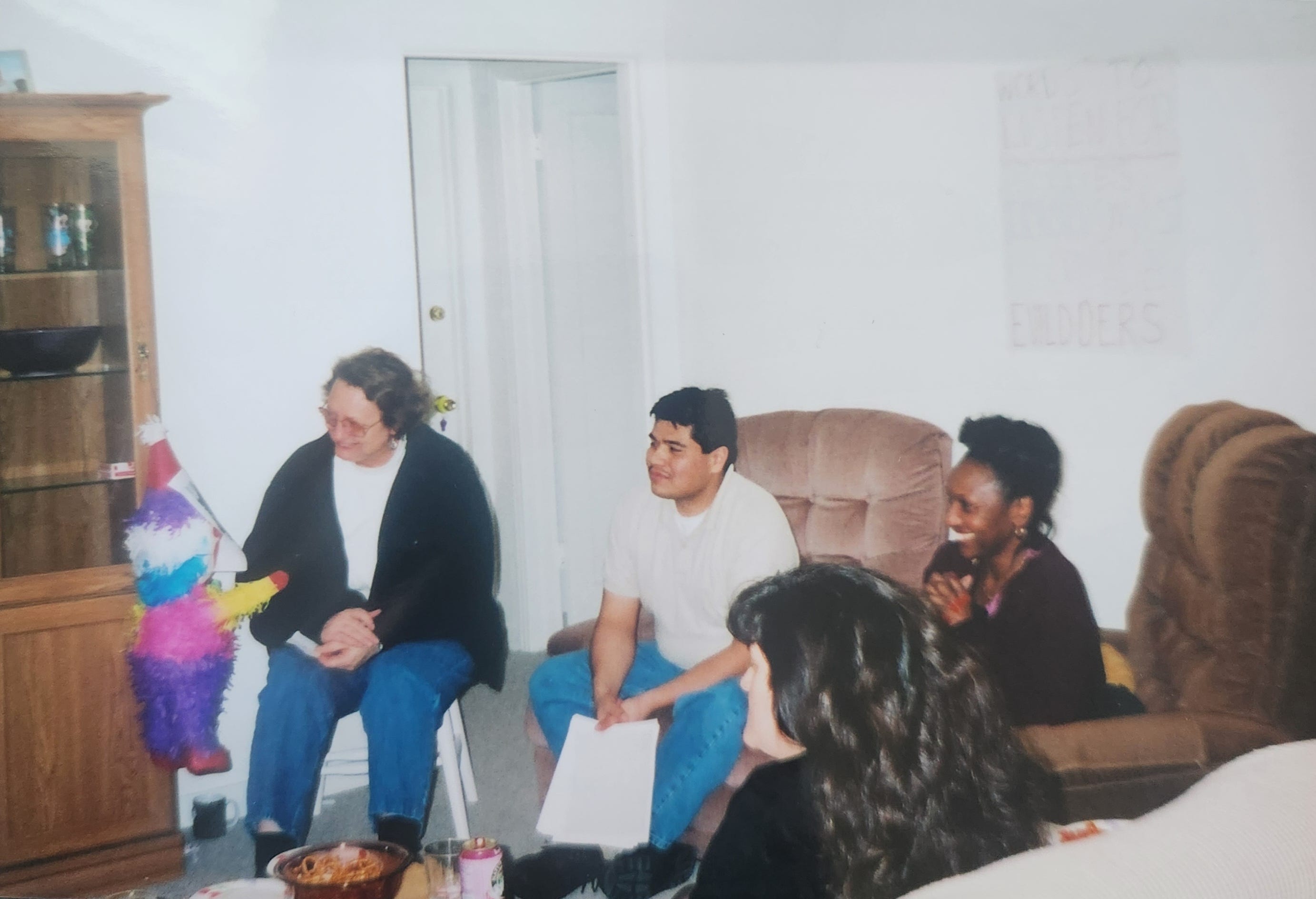
For George Bush’s first State of the Union speech, I had a SOTU party. (See the photo!) Guests pledged small amounts of money for each time Bush said a few key words. We raised a few hundred dollars for causes he would hate, like anti-war and feminist organizations.
Invite your friends and co-conspirators to mock someone who deserves it (there are so many choices!) and fight for democracy at the same time. Raising money locally helps us reclaim power by taking some of the funding decisions out of the hands of giant foundations and the wealthy.
What’s the common thread here?
Taking action together. Becoming part of a powerful community is the best self-care.
What action helps you feel grounded when the political world seems out of control?
Campaign Mysteries - Poll
While you’re here . . . help me out with some decision-making.
A couple of years ago, a friend posted a video asking why she kept getting so much political mail. And why it broke all the rules of marketing.
With the first primaries of 2026 coming up in about six weeks, there might be some additional campaign mysteries out there, especially for folks who haven’t been knocking on doors since 1988.
What’s the biggest mystery for you? I’ll post explainers for all of the mysteries below; the vote will determine the order.
Also, if you have expertise in any of these mysteries, let’s collab on the answers! Reply to me or put it in the comments.
The poll will be open for a week.
One more favor? Please share it so more people can vote!
I think one of the most important of the 5 answers you highlight is Get educated; educate others. So often people just don't have the information they need to make an opinion, and they don't know what to do i.e. how to take action. The communication and education about people's rights is why the citizens of Minneapolis have been so effective. knowing why and what to do gives people the power to change things.
My answer: “Do something. Do anything!” Of course a lot of our democratic institutions have failed to give meaningful or worthwhile places for people to participate in ways where they can bring their full selves, and that’s part of how we got into this mess.
What I really appreciate about this piece is that none of your answers are symbolic or isolating. They’re relational, collective, and rooted in real-world proximity, exactly the kind of participation our politics has been starving people of.
Relational organizing, rapid response networks, abortion support, shared learning spaces, even social funding, these aren’t just “alternatives” to traditional campaign work. They’re ways people actually experience themselves as part of a democratic community again. They create agency, accountability, and care at human scale. You can feel the difference between acting for something alone and acting with others.
The common thread you name matters. Taking action together isn’t just more effective, it’s potentially transformational. It counters the panic and helplessness that come from consuming politics only as spectators. These are forms of participation that rebuild trust horizontally, not just hope vertically.
This is the kind of “do something” that doesn’t burn people out, it roots them. And right now, that might be the most important work of all if we have any hope to get back to democracy.